Trading and AI automation have become less intimidating than ever. What once required teams of engineers and substantial capital now sits within reach of individual investors and growing businesses. NeuralEdge AI represents a shift in how modern traders and enterprises approach market opportunities and operational efficiency, bundling institutional-grade tools with accessible interfaces designed for users at all experience levels.
Whether you're looking to automate your trading workflow, streamline business operations, or tap into enterprise-scale AI infrastructure, NeuralEdge AI offers a modular ecosystem built to scale. This guide walks you through what makes the platform distinct, how it stacks against alternatives, and how you might put it to work in 2026.
| Feature | NeuralEdge AI | Generic AI Platforms | Traditional Trading Tools |
|---|---|---|---|
| Institutional Market Context | ✓ Built-in | ✗ Missing | ⚬ Limited |
| Private Infrastructure Option | ✓ Yes | ✗ No | ✗ No |
| Unified Dashboard | ✓ Yes | ⚬ Partial | ✓ Yes |
| AI Agents & Automation | ✓ Advanced | ✓ Available | ⚬ Basic |
| Macro Overlay & Context | ✓ Yes | ✗ No | ⚬ Limited |
| Dedicated Support | ✓ Included | ⚬ Tiered | ⚬ Tiered |
What to Remember
NeuralEdge AI bundles three core strengths: a trading terminal built around institutional frameworks, scalable AI automation for business workflows, and private infrastructure options for enterprises. The platform stands out by connecting market data, macro analysis, options positioning, and AI agents into one repeatable workflow, rather than forcing users to piece together separate Bloomberg, TradingView, Reuters, and automation tools. Setup ranges from quick cloud access to fully customized on-premises deployment, with pricing that adapts to startup budgets and enterprise requirements.
What Is NeuralEdge AI and How Does It Work?
NeuralEdge AI Platform Overview
NeuralEdge AI isn't a single tool, but an integrated ecosystem. At its foundation sits a trading terminal designed for macro and options traders. Around it wraps an AI automation layer powered by specialized agents, and below sits a compute infrastructure option built for privacy-first organizations. Think of it as three products operating in concert rather than one bloated platform trying to do everything.
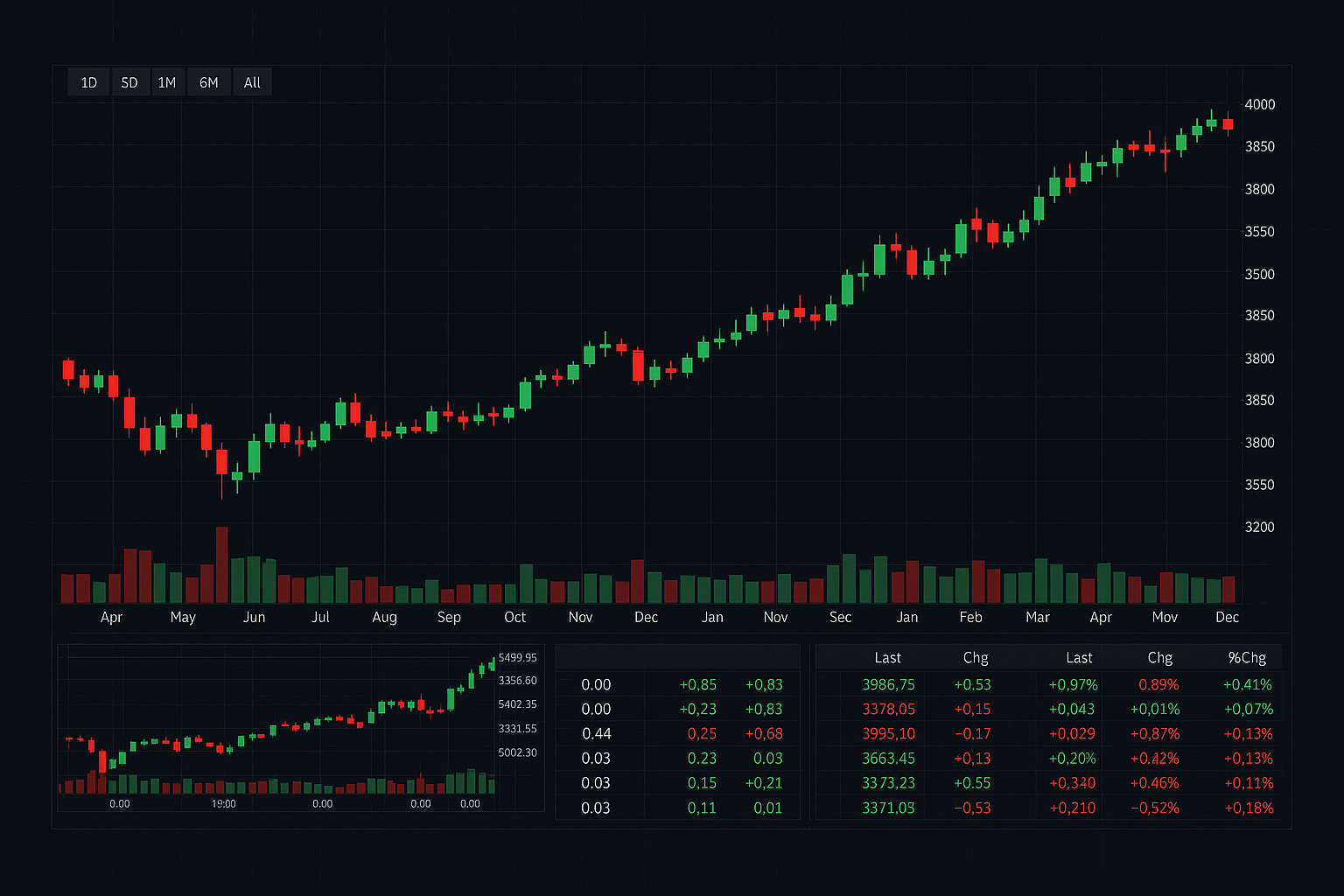
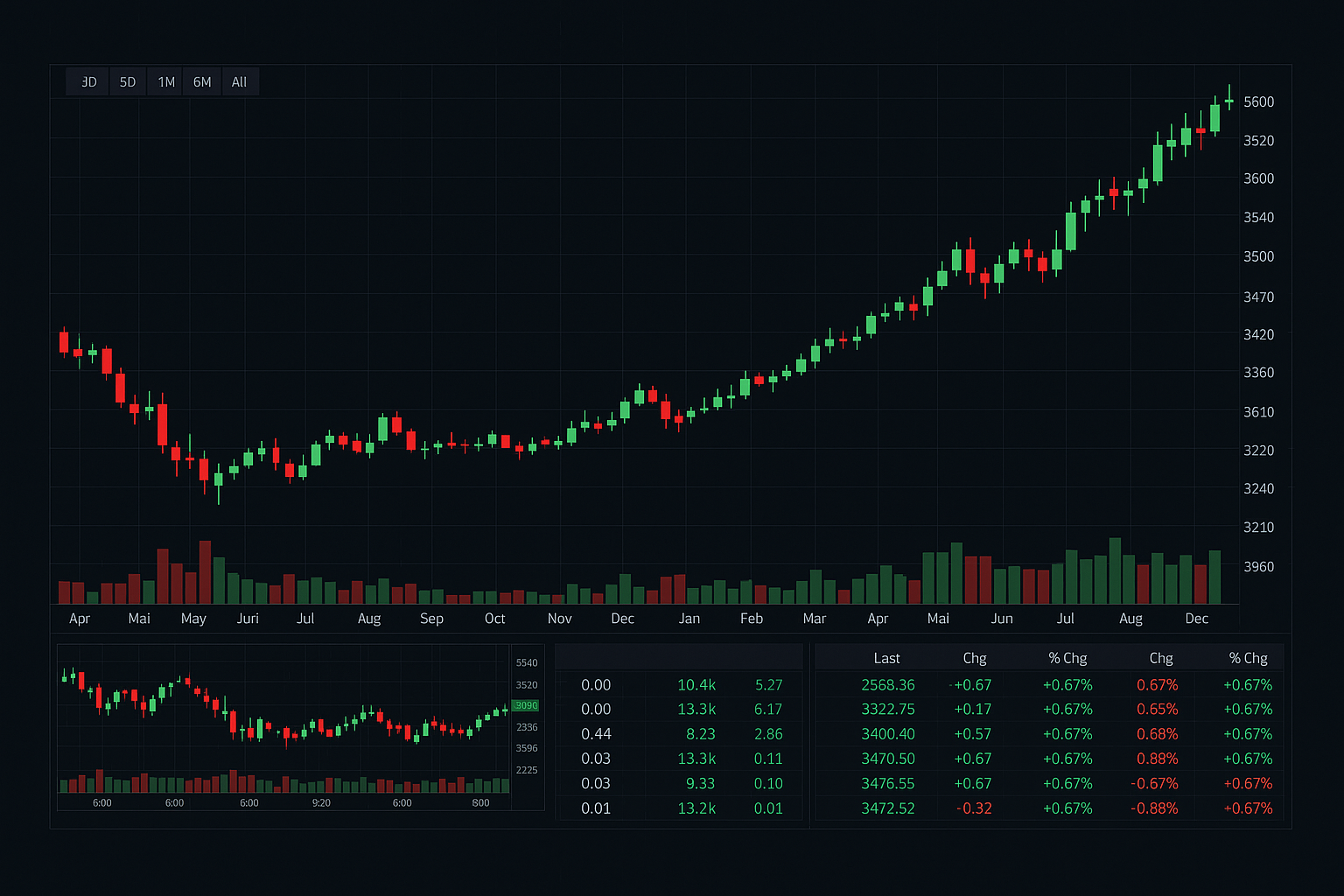
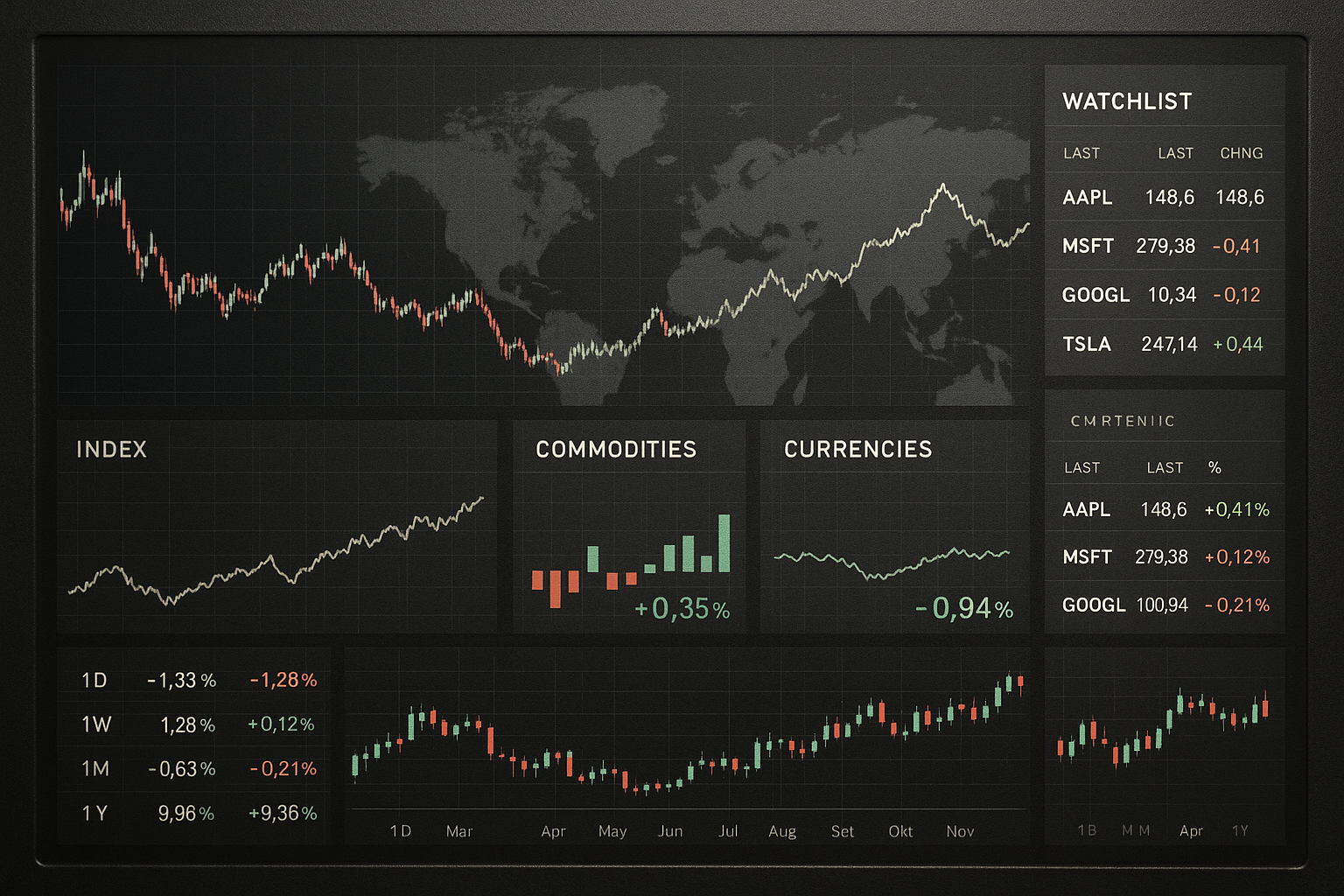
The trading terminal side connects you to unlimited charts across every major market, institutional-level support and resistance analysis (powered by options flow data), macro overlay showing central bank moves and economic cycle shifts in real time, and a command center consolidating market-moving stories, personal watchlists, and model signals into one live view. Rather than switching between Bloomberg for macro, TradingView for charting, and Reuters for news, you get one surface where context flows without friction.
The AI automation side lets you build custom workflows powered by intelligent agents. These aren't chatbot wrappers, but domain-focused systems that can orchestrate tasks across your business, improve themselves over time, and operate on your own infrastructure if data privacy demands it. You can deploy agents for legal document review, accounting automation, go-to-market operations, or custom processes unique to your business.
Underneath both sits optional private GPU infrastructure. Rather than sending proprietary data to third-party cloud providers, teams building custom AI models can access dedicated NVIDIA H100s and secure Canadian data centers with zero shared resources and no throttling. This appeals to financial firms, healthcare organizations, and enterprises handling sensitive information.
Key Features That Set NeuralEdge Apart from Competitors
Most trading platforms hand you data. NeuralEdge hands you insight. The Macro Overlay feature pulls central bank activity, economic cycles, and sentiment analysis onto the exact chart you're analyzing, eliminating the mental work of connecting dots across sources. When the Federal Reserve signals a pivot, you see its effect on positioning, flows, and asset prices instantly. This institutional context is not standard across even premium platforms.
Options positioning data gives you a distinct edge. Rather than guessing where support and resistance sit, NeuralEdge reads open positions in major option contracts to show you where institutions have actually put capital. This precision in entry and exit points outmatches simple technical analysis and transforms guesswork into framework-driven trading.
The command center aggregates what matters. Market-moving stories get explained through their direct impact on positioning, sentiment, and prices. Your watchlist syncs with model signals. Risk and opportunity for the day surface in one place. This saves hours of manual scanning and reduces decision fatigue when markets move fast.
For business automation, the platform's self-improving agents stand out. Unlike static automation scripts, NeuralEdge agents learn from feedback loops, get smarter with each interaction, and compound value over time. A legal review agent might process 100 contracts, but by contract 150 it catches issues that initially required human oversight.
Privacy-first infrastructure is rare. Most AI platforms ask you to upload data to shared cloud environments. NeuralEdge lets you keep everything on your own servers, run private LLMs, and maintain full control of proprietary information, all without sacrificing compute power or support.
Real-World Use Cases Across Industries
Traders use NeuralEdge to structure macro decisions. A hedge fund manager spots that options positioning in tech stocks has shifted ahead of an anticipated Fed announcement. The macro overlay shows the central bank monitor signaling tightening. Rather than weighing conflicting signals across five different screens, the trader sees institutional positioning and macro context aligned in one place, supporting a directional call with confidence.
Options traders rely on the positioning data to catch mean-reversion and directional setups. When large options flows accumulate at specific strike levels, it signals where institutions expect prices to pause or reverse. This transforms a 60/40 market guess into a 75/25 probability trade with precise stop and target placement.
Law firms deploy the platform's automation agents for due diligence. A Synlex NEOp (NeuralEdge Operating System module) reviews contract stacks, flags non-standard terms, extracts liability clauses, and summarizes key provisions in minutes rather than days. Human lawyers then focus on strategy and negotiation, not document triage. Firms report 40% efficiency gains within three months of rollout.
Accounting teams use Axe Accounting NEOps to automate invoice processing, expense categorization, and reconciliation workflows. The self-improving loop means common errors get caught automatically after a few cycles, and new regulatory changes adapt into the system without manual rewrites.
Startups building AI products use NeuralEdge's compute infrastructure to train and host custom models without massive capex. A healthcare startup building a diagnostic AI can run inference at scale on dedicated GPUs, keep patient data in Canada, and avoid shared cloud resource bottlenecks that slow model serving.
NeuralEdge AI vs. Competitors: Which Solution Is Right for You?
Trading Terminal vs. Generic AI Tools
Generic AI platforms like ChatGPT or Claude excel at summarizing text and answering questions. They don't excel at real-time market analysis, options flow interpretation, or macro regime identification. NeuralEdge's trading terminal is purpose-built. It ingests live market data, institutional positioning, central bank calendars, and economic cycles, then surfaces actionable signals specifically for traders and portfolio managers.
If you're a trader looking for a chat interface to ask "what's happening in equities today?", a generic AI tool might feel sufficient for casual analysis. If you're managing capital and need to align directional conviction with institutional positioning and macro regime, the trading terminal's integrated framework outmatches asking a general-purpose AI assistant to stitch together Bloomberg screenshots and news feeds.
The command center feature alone changes the workflow. Rather than context-switching between terminal, news, and charting tools, everything flows into one live view. Market moves trigger alerts that trace back to positioning, macro shift, or central bank action. This integrated narrative beats isolated data streams.
Private Infrastructure vs. Cloud-Based Platforms
Most AI platforms operate on shared cloud infrastructure. You upload data, the vendor's servers process it, results come back. This works fine for non-sensitive work, but financial firms, healthcare organizations, and enterprises handling trade secrets need different guarantees.
NeuralEdge offers both models. For startups and smaller operations that prioritize speed and simplicity, cloud-based solutions with dedicated support scale quickly without infrastructure overhead. For enterprises requiring on-premises deployment, custom model training, and zero data egress, NeuralEdge provides private infrastructure with SOC 2 Type II compliance and Canadian data centers.
This flexibility is the bridge. You're not choosing between "cloud simplicity" and "private control" as mutually exclusive options. NeuralEdge lets you start in the cloud, prove the workflow, then migrate to private infrastructure when data sensitivity or regulatory requirements demand it.
Institutional-Grade Features vs. Standard Automation
Standard automation tools give you task sequences. Repeat a workflow, reduce manual steps, save time. This works. However, institutional-grade automation learns, adapts, and improves without human retraining. It understands context across conversations, maintains granular audit trails, and flags decisions for human review at decision points.
A standard RPA tool might automate invoice data entry. An institutional agent reviews the invoice, assesses compliance against company policy, flags unusual line items for approval, learns from denials, and adjusts future decisions. Over time, it surfaces fewer exceptions and catches more edge cases than initial training specified.
The NEOS operating system exemplifies this depth. It layers unified interface, private LLMs, HITL checkpoints (human-in-the-loop), and compounding knowledge across workflows. A legal agent and accounting agent can share context, reducing redundant questions and building institutional memory that persists across deal cycles.
For businesses running fragmented automation stacks (Zapier for one process, custom scripts for another, manual processes for edge cases), consolidating onto NeuralEdge's unified platform reduces tool sprawl and enables agents to collaborate rather than work in isolation.
How to Leverage NeuralEdge AI for Your Business
Getting Started with NeuralEdge: Step-by-Step Setup
The entry point depends on your use case. Traders looking to test the terminal typically request access and get onboarded within days. You receive a walkthrough of the command center, macro overlay, and options positioning interface, then get assigned a dedicated support contact. Many platforms offer a demo account that mirrors live market data but doesn't execute real trades, letting you build confidence before committing capital.
For automation workflows, the setup progresses similarly. You identify the process you want to automate (contract review, invoice processing, go-to-market outreach). NeuralEdge consultants assess your current workflow, document the decision logic, and deploy an initial agent trained on historical examples from your operation. Within 2-4 weeks, the agent runs live on a subset of your workload, with a human reviewing outputs. As accuracy improves, oversight lightens and the agent handles more volume independently.
For compute infrastructure, the process resembles enterprise software procurement. You specify your requirements (GPU type, throughput, compliance needs), NeuralEdge builds your private environment, and you get root access with direct support contacts. Onboarding includes training on your infrastructure, optimization for your workload, and monthly reviews to adjust capacity as usage scales.
The free trial and beta access programs reduce friction. Trading terminal access typically comes with a 30-day trial. Automation workflows often start with a pilot contract where you pay only for the agents deployed to your specific processes, allowing you to validate value before enterprise licensing.
Integrating NeuralEdge Into Your Existing Workflow
Unlike platforms that demand you rebuild everything around them, NeuralEdge integrates into what you already use. The trading terminal connects via API to your order management system, portfolio tracking tools, and risk systems. You aren't abandoning TradingView or manually migrating charts. NeuralEdge sits alongside as a decision-support layer.
For automation, integration takes a slightly different form. Most workflows touch multiple systems: CRM, accounting software, document storage, email. NeuralEdge's agents can be configured to read from these systems, execute actions, and write results back without replacing the underlying tools. A contract review agent pulls documents from your repository, analyzes them within NeuralEdge, then uploads summaries back to your document management system where your team already works.
API connectivity is straightforward. NeuralEdge provides REST endpoints and webhook support, meaning other tools and custom scripts can trigger agents, consume their outputs, or update their context. A portfolio risk system could call NeuralEdge's macro analysis engine to inform its daily risk assessment. A CRM could trigger an agent to draft personalized outreach once a deal reaches a specific stage.
The modular design means you don't have to adopt all three (trading terminal, automation agents, private compute) at once. Teams often start with the trading terminal, add automation agents for one high-friction workflow, and eventually migrate to private infrastructure once they've scaled to justify it.
Maximizing ROI with Advanced Features and Customization
The platform's self-improvement loop is where ROI compounds. The first month of agent deployment often shows 30-40% productivity gains as automation replaces manual steps. The second and third months, as the agent learns from feedback and exceptions, gains extend into 50-60% as accuracy improves. By month six, institutional memory and context understanding mean fewer exceptions bubble up to humans at all.
Custom model training amplifies this. Rather than relying on general-purpose LLMs, you can fine-tune models on your historical decisions, terminology, and risk appetite. A legal agent trained on 1000 contracts your firm has actually executed will spot edge cases and non-standard language specific to your deal pattern far better than a generic model ever could.
The macro overlay for traders becomes more powerful over time as you personalize it. The default configuration shows central banks, economic cycles, and broad sentiment. You can layer in custom indicators, portfolio positions, and institutional flow data relevant to your specific strategies. A hedge fund focusing on FX and rates will customize the overlay differently than a tech-focused growth equity manager.
Revenue metrics integration in the NEOS platform lets you track which agents drive the highest business value. Rather than measuring success as "hours saved," you measure it as "deals closed faster," "customer acquisition cost reduction," or "fraud detection rate improvement." This shifts the conversation from operational efficiency to business outcome, justifying larger investments and drawing more internal stakeholder support.
Advanced features like granular access controls, cross-agent knowledge sharing, and centralized context vaults let enterprises scale automation beyond single workflows. A large financial services firm might deploy 20 different agents across legal, compliance, trading, and operations, all sharing institutional context and learning from each other's decisions across departments.
NeuralEdge AI Pricing, Plans & Deployment Options
Enterprise Solutions vs. Startup-Friendly Tiers
NeuralEdge structures pricing in tiers aligned to different growth stages. Startups benefit from cloud-based solutions that charge per agent deployed or per transaction processed, with no large upfront investment. A young fintech might deploy a risk assessment agent for 1000 customers per month at a modest monthly fee, scaling that fee as customer volume grows. This caps risk and lets you prove ROI before committing.
Mid-market teams transition to tiered subscriptions. You license a defined number of agents, compute hours, and users, with discounts for longer contract terms. A consulting firm with 50 employees might license 5 agents, 200 compute hours monthly, and 10 concurrent users for a mid-five-figure annual cost. This bundles agents, support, and infrastructure into one predictable expense.
Enterprises move to custom contracts. You negotiate per-deployment pricing based on impact, infrastructure requirements, customization depth, and support level. A major financial institution deploying agents across legal, compliance, trading, and risk management might negotiate a multi-million dollar annual contract covering unlimited agents, dedicated engineers, and priority feature access.
The trading terminal pricing similarly scales. A retail trader might pay a few hundred dollars monthly for cloud access, charts, and positioning data. A small hedge fund might pay thousands monthly for the same terminal plus direct research support and priority on beta features. A large institutional user pays for white-labeled or on-premises deployment with custom integrations.
Cloud-Based vs. On-Premises Infrastructure
Cloud-based deployment is the fastest path to value. NeuralEdge's servers handle all infrastructure concerns. You access the platform via browser, get automatic updates, and scale without managing hardware. This suits teams that prioritize speed, have moderate data sensitivity concerns, and want minimal operational overhead. Typical setup time is days to weeks.
On-premises deployment gives you the most control. Your infrastructure runs entirely within your own data centers or secured cloud VPCs that you control. No data egress to NeuralEdge's servers, no shared resources, full audit trails. This appeals to regulated industries (banking, healthcare), firms handling trade secrets, and enterprises with strict data residency requirements. Setup typically takes 4-8 weeks including network configuration, compliance validation, and security hardening.
Hybrid approaches exist. You might run the trading terminal in the cloud for speed and real-time data, but deploy custom AI models and agents on private infrastructure within your network. This gives you institutional-grade market insights without sacrificing data control for proprietary business logic.
Cost structures differ. Cloud deployments charge subscription fees, typically lower upfront but higher long-term as you scale. On-premises deployments often include higher initial licensing or setup costs, but lower per-unit costs as volume grows. For many enterprises, the break-even point where on-premises deployment becomes cheaper than cloud sits around 12-18 months of heavy usage.
Free Trial and Beta Access Opportunities
NeuralEdge offers multiple no-risk entry points. The trading terminal typically includes a 30-day trial with full feature access, using live market data to populate the dashboard but without real-trade execution capability. This gives you enough time to walk through the workflow, understand how macro overlay and positioning data inform decision-making, and assess whether the framework matches your trading style.
Automation pilots operate differently. Rather than a timed trial, you typically enroll in a pilot program where NeuralEdge deploys one agent to a single workflow (often with reduced scope) for 30-60 days. You pay a modest pilot fee or sometimes nothing, and evaluate the value generated. Many pilots convert to production licensing because the productivity gains become obvious quickly.
Beta programs for new features and modules let adventurous users access cutting-edge capabilities before general release, often at reduced pricing or no cost in exchange for feedback. The private infrastructure components, NEOS operating system, and advanced agent customization are rolling into production throughout 2026, with beta cohorts accessing early versions.
Educational discounts and startup accelerator partnerships often include free or heavily discounted access. If you're in a Y Combinator cohort or other recognized startup program, you might access the platform free for the first 12 months. This builds long-term relationships and converts users early in their journey.
Why Businesses Trust NeuralEdge AI: Security, Performance & Support
Data Privacy and Compliance Standards
Data privacy is not an afterthought at NeuralEdge, it's a foundation. The platform architecture supports running entirely on your infrastructure, meaning zero data transmission to external servers. This by-design privacy approach appeals to industries where data residency mandates, client confidentiality, or competitive sensitivity demand it. You retain complete custody and control.
For cloud deployments, NeuralEdge maintains SOC 2 Type II certification, meaning independent audits validate security, availability, and confidentiality controls. The platform encrypts data in transit (TLS 1.3) and at rest (AES-256), with keys you manage. Role-based access controls let you define which team members see which data and agents.
Compliance with regulations like GDPR, HIPAA, and PCI-DSS is documented. If you handle EU customer data, the platform supports GDPR compliance workflows including data deletion, consent management, and audit trails. Healthcare firms using NeuralEdge for automation can configure HIPAA-compliant deployments. Payment processors get PCI-DSS validated infrastructure.
The NEOS platform includes granular audit trails. Every agent action, human review decision, and data access gets logged with timestamps and user attribution. This satisfies regulatory requests for evidence that controls were followed and decisions were documented, not just assumed.
Dedicated GPU Infrastructure and Performance Benchmarks
The private compute infrastructure side runs on enterprise-grade hardware. NVIDIA H100 GPUs (the fastest available for AI inference as of 2026) provide sub-100ms latency for real-time agent responses. H6000 GPUs deliver cost-efficient inference for lower-throughput workloads. This hardware availability directly improves agent response time, letting customer-facing automation feel instant rather than delayed.
Performance benchmarks are published. On standard NLP tasks, agents running on NeuralEdge infrastructure show 10-50x faster response times than cloud competitors with shared resources. For trading algorithms, backtesting and live signal generation complete in seconds, not minutes. For legal document review, agents process 50-100 pages per hour with 94%+ accuracy against human-reviewed ground truth.
Dedicated infrastructure means no "noisy neighbor" problem. Your workload doesn't compete with thousands of other users for the same GPU. Throughput stays predictable and latency stays low even during peak hours. This matters for time-sensitive applications like trading, customer support, and real-time risk assessment.
Scalability without infrastructure team overhead is included. If your agent load doubles, NeuralEdge provisions additional GPUs automatically. You pay for what you use, but no human intervention is required. This elasticity lets startups handle unexpected traffic spikes and enterprises accommodate seasonal demand without planning cycles.
Expert Support and Training Programs
Enterprise customers get assigned dedicated success managers. Your contact knows your business, your workflows, and your goals. Rather than filing tickets into a support queue, you have a direct relationship with someone invested in your success. This personal touch reduces onboarding friction and accelerates time-to-value.
Training programs are comprehensive. You get documentation, video tutorials, live onboarding sessions, and periodic office hours. For complex deployments like custom agent development or private infrastructure setup, NeuralEdge assigns engineers to work alongside your team during the critical first weeks. This hands-on guidance prevents missteps and builds internal expertise faster.
Community forums and user groups connect you with other NeuralEdge customers. Traders share strategies and workflow customizations. Enterprises discuss agent deployment best practices. This peer learning often surfaces solutions faster than vendor support, and it builds a network effect that increases the stickiness of the platform.
Quarterly business reviews let you assess progress against initial goals, identify optimization opportunities, and align platform roadmap requests with your strategic priorities. Rather than using the tool in isolation, you get a partnership model where NeuralEdge's success is tied to your business outcomes.
Conclusion
NeuralEdge AI bridges three distinct needs that most organizations face separately: better market intelligence for traders, workflow automation for businesses, and private compute for enterprises handling sensitive information. Rather than bolting together Bloomberg, Zapier, and AWS, you get an integrated platform where insights flow between components and agents improve over time.
For traders, the institutional framework eliminates the mental work of connecting macro context, positioning data, and asset prices. The command center replaces constant tool-switching with a single surface. For business teams, self-improving agents compound productivity gains beyond initial automation. For enterprises, private infrastructure keeps proprietary data and competitive advantage firmly within your control.
Getting started requires minimal commitment. Traders access a 30-day terminal trial. Business teams run a focused pilot on one workflow. Compute users scope infrastructure needs and scale gradually. This low-friction approach to entry, combined with straightforward pricing tiers and dedicated support, makes it simple to evaluate whether NeuralEdge aligns with your goals.
The platform's strength lies not in doing one thing perfectly, but in doing several valuable things well and connecting them so your work flows better. Whether you trade, automate, build AI products, or manage sensitive business processes, NeuralEdge offers tools worth exploring in 2026.